Kumbhasi · Udupi District · Karnataka
ಶ್ರೀ ಮಹಾಲಿಂಗೇಶ್ವರ ದೇವಸ್ಥಾನ, ಕುಂಭಾಸಿ
Sri Mahalingeshwara Temple
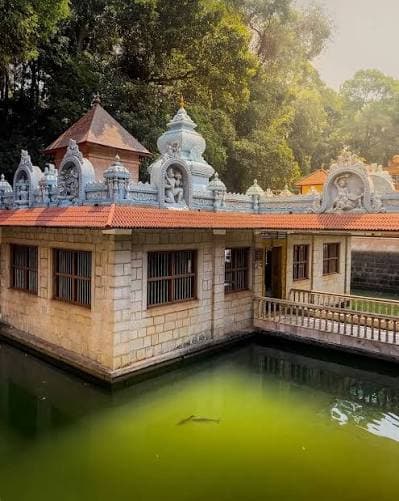
Known as the Harihara Devasthana, where Hari and Hara are worshipped together in the sacred presence of the Ganga — this is an ancient temple of coastal Karnataka. One of the seven Mukti Sthalas of the Parashurama Kshetra, and near to it stands Sri Sode Vadiraja Mutt, Kumbhasi — the original seat (mula matha) of the Sode Vadiraja Matha tradition.
Deity
Sri Mahalingeshwara — Vishnu & Shiva as one
Sacred order
1 of 7 Mukti Sthalas, Parashurama Kshetra
Location
Kumbhasi, Kundapura Taluk, Udupi District
Matha heritage
Near Sri Sode Vadiraja Mutt, Kumbhasi — its mula matha
Welcome
Where Hari and Hara stand as one
Set beside National Highway 66 in Kumbhasi village, this temple is unusual even among Karnataka's many shrines: its presiding deity, Harihara, unites Vishnu and Shiva in a single consecrated form. Pilgrims travelling the coastal Parashurama Kshetra circuit — from Kukke Subrahmanya to Gokarna — count Kumbhasi among the seven sacred Mukti Sthalas believed to grant liberation.
The kshetra also carries deep significance for the Madhwa tradition: it was the seat of the original Kumbhasi Matha, one of Sri Madhwacharya's Ashta Mathas, before it grew into the Sri Sode Vadiraja Matha. The samadhi (Vrindavana) of Sri Varadaraja Tirtha stands beside the temple to this day.
One deity, two names
The presiding deity is worshipped as Sri Mahalingeshwara, also known as Harihareshwara — a form uniting Hari (Vishnu) and Hara (Shiva). The village name Kumbhasi carries its own layered legend: an earlier Treta Yuga account names the site Madhuvana, while a later Dwapara Yuga tale credits Bhima's battle with the demon Kumbhasura.
Read the full legend →Legend
From Krita Yuga to Dwapara Yuga
Krita Yuga
Parashurama installs Hari-Hara
Maharshi Parashurama is said to have consecrated two murtis together at this spot — Hari (Vishnu) and Hara (Shiva) — establishing the Hari-Hara worship still honoured today as Sri Mahalingeshwara, also known as Harihareshwara.
Dwapara Yuga
Bhima and the demon Kumbhasura
Tradition holds that Bhimasena of the Pandavas, aided by a boon from an elephant-form Vinayaka, slew the demon Kumbhasura here with his sword (asi). Over time the kshetra came to be known as Kumbhasi — and the same Vinayaka is honoured today at the nearby Anegudde temple.
Nearby in Kumbhasi
More sacred ground, a short walk away
Sri Anegudde Vinayaka Temple
A short distance away on the Anegudde hillock stands one of coastal Karnataka's best-known Ganesha shrines, worshipped as Siddhi Vinayaka. A temple account ties the two shrines together directly: it credits an elephant-form Vinayaka with granting Bhima the boon to slay the demon Kumbhasura at Kumbhasi, and describes darshan at both temples — Hari-Hara first, then Ganapati — as one continuous pilgrimage.
Sri Chandika Durgaparameshwari Temple
A Durgaparameshwari shrine in Kumbhasi, part of the same cluster of village deities.
Planning a visit?
Check darshan timings, directions from Udupi and Kundapura, and nearby stay options.